You know the moment: the chemical feed skid shows up, everyone’s ready to install, and then something small becomes a big delay—fit-up issues, missing details, wiring questions, or a vendor saying, “That part wasn’t ours.”
If you’re a maintenance manager, you don’t care who caused the issue. You care that the system is down (or can’t start up) and your team is stuck acting as the middleman between multiple vendors.
Single-source skid fabrication is one of the most practical ways to reduce those headaches—especially on chemical feed skids, where structure, piping, electrical, and controls all have to work together.
In a discussion with Scott Weiss (General Manager, AmeriChem Systems) and Michael Perry (National Sales Manager, AmeriChem Systems), we talked about a simple idea that can prevent a lot of that pain: single-source skid fabrication.
Changes are guaranteed. Slow fixes don’t have to be.
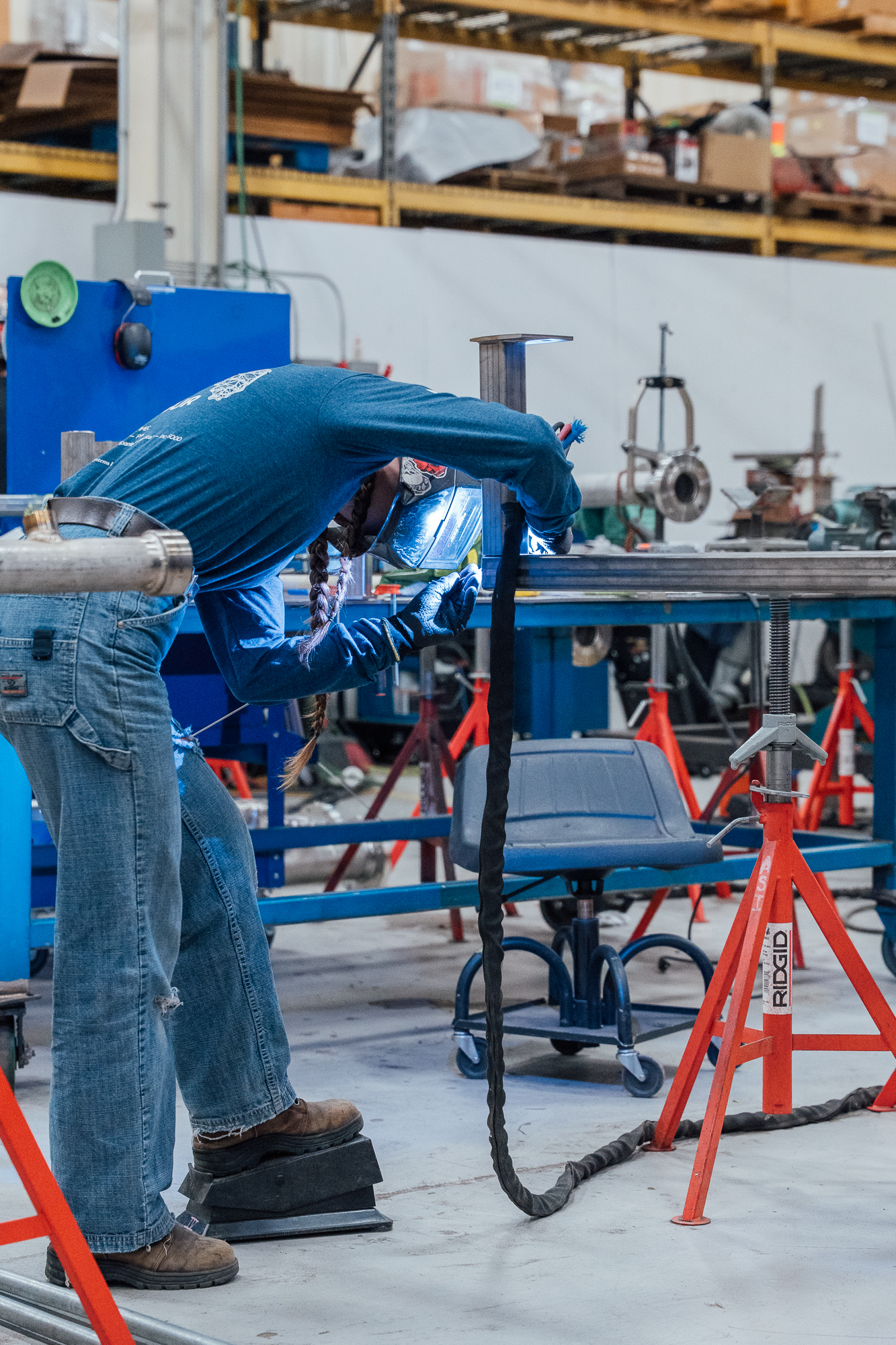
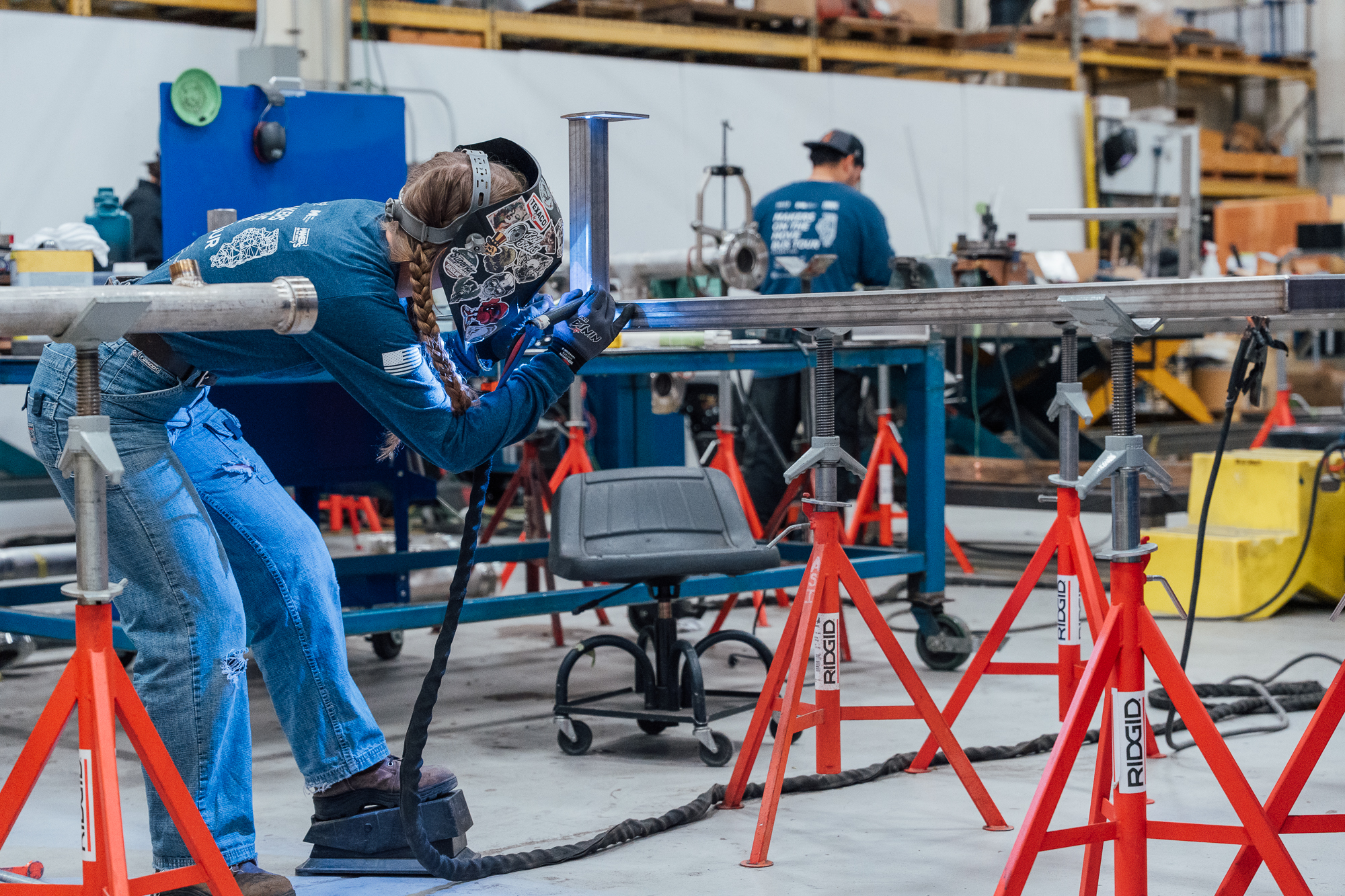
Skid fabrication at AmeriChem Systems
Scott summed up reality well: “the only thing really guaranteed during the build process is that there’ll be adjustments and changes and issues that come up…”
Chemical feed skids are custom equipment. You’re not buying a commodity—your plant constraints, chemical compatibility, tie-in points, and control requirements all shape the build.
So the goal isn’t “no issues.” The goal is fast resolution when issues appear—before they turn into multi-day delays, install workarounds, or repeated trips back to the skid.
That’s where single-source skid fabrication earns its keep.
What is single-source skid fabrication (in plain English)?
Michael describes single-source skid fabrication as reducing “division of labor” so fewer gaps appear late in the project. In short: keep as much as possible under one roof—design, fabrication, electrical, and programming—so you reduce finger-pointing and missing scope items at the end.
Scott adds an important clarification for maintenance teams: it’s not just “welding happens here.” Single-source fabrication starts earlier—conceptual design, P&IDs, and general arrangement—then integrates electrical design and feedback from the people who will actually build (and service) the skid.
In other words: one accountable team owns the whole outcome, not just pieces of it.
Why multi-vendor chemical feed skids create startup headaches
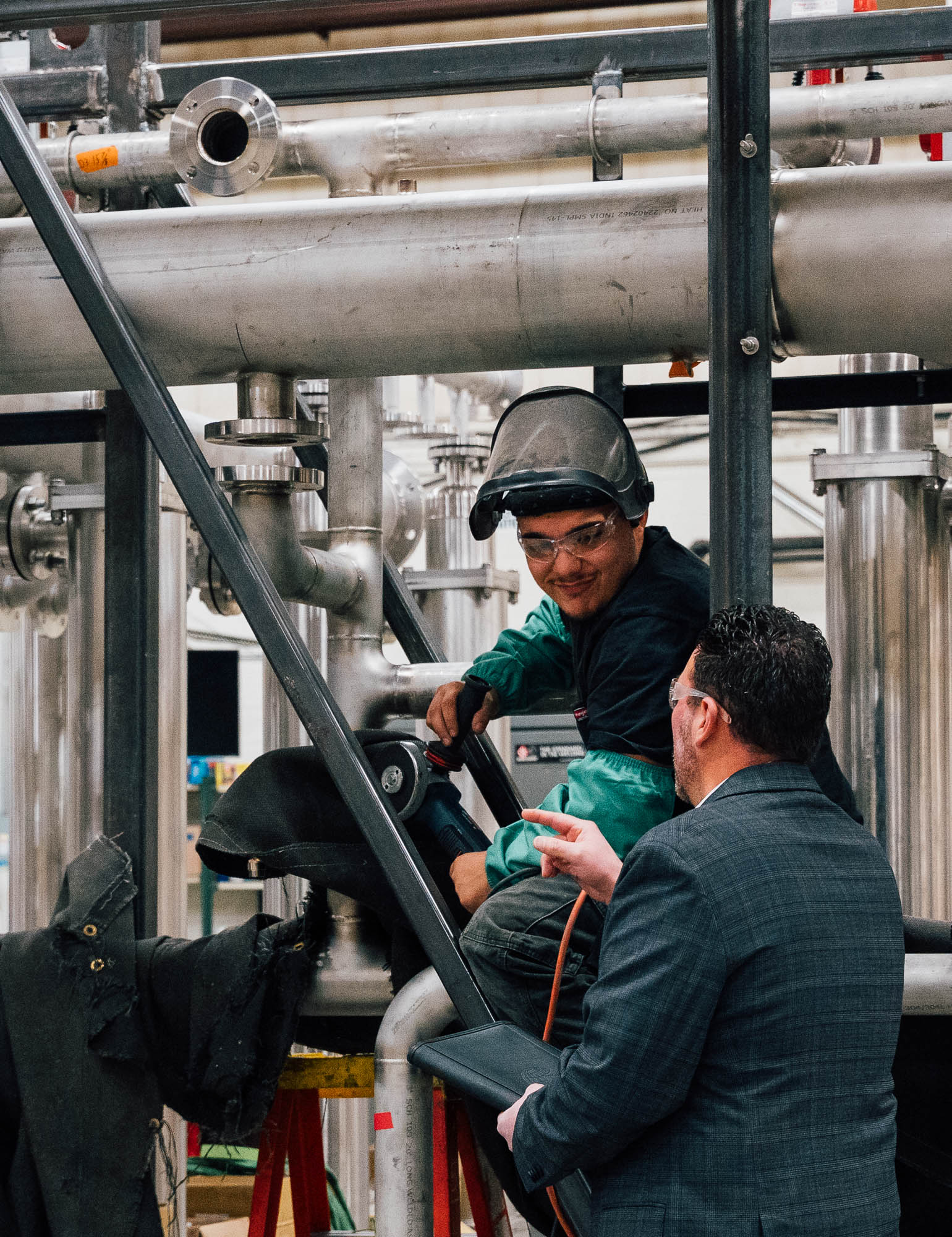
Scott Weiss speaking to AmeriChem Systems fabricator
Multi-vendor projects don’t fail because people are careless. They fail because handoffs create gaps—and those gaps show up at the worst possible time: during assembly and commissioning.
Michael gives a common example: one company supplies the structural frame, another fabricates the process piping spools, and a third party assembles everything. Even if everyone builds “to the prints,” you can still end up with misalignment and print-related disputes: “is it the frame that’s 1/4 inch off or is it the pipe welds… too thick?”
And that’s before you add the things that make a chemical feed skid a real system:
-
Control panels and field wiring
-
Instrumentation integration
-
PLC programming
-
Multiple modules that must interact (mixing + injection, etc.)
Michael’s point is straightforward: as complexity goes up, the communication load and room for error goes up too—unless one team owns the deliverable.
No maintenance manager wants more vendors to manage communication between. They need a system that works.
What single-source skid fabrication changes for maintenance
Faster problem-solving when something shifts
Scott’s biggest claim isn’t “we never hit issues.” It’s that when issues come up, teams can pull together quickly and solve them “right there on the spot.”
That matters because most schedule slips aren’t caused by one big disaster—they’re caused by stop-and-start work while people wait on answers. Single-source skid fabrication reduces that waiting.
Buildability and maintainability get addressed before steel is cut
This is where maintenance teams feel the difference months later.
Scott describes kickoff meetings where builders can look at a concept and give real-time feedback like: “put these supports over there,” and—more importantly—“an operator’s not going to be able to reach a pump if it’s over there.”
That’s not an “engineering preference.” That’s the difference between a skid that’s serviceable and one that becomes a recurring headache.
Testing happens before the skid hits your plant
A lot of commissioning pain is avoidable if the skid is powered, checked, and validated in the shop.
Scott describes moving finished systems into testing for power-up functional checks and point-to-point verification (plus inspections as required). For maintenance teams, that typically means fewer unknowns on install day—and fewer “we’ll figure it out in the field” surprises.
Documentation that supports maintenance long after startup
When a pump fails, an instrument needs replacing, or the plant needs to modify the system, good documentation saves time.
Michael calls documentation a “key differentiator,” describing detailed scope documents, 3D models, testing documentation/photos, data books for components, and as-built documentation—because parts can shift slightly during the build, and “an inch to the left or right” can matter later.
Scott adds what maintenance teams actually need in the closeout package: P&ID/GA/3D model up front, and on the back end the collected MTRs, IOMs, and as-built drawings so future service and replacement doesn’t become a guessing game.
Real-world examples of how multi-vendor scope adds time
Here are examples we’ve seen when customers require parts of the build be outsourced or split across multiple parties:
-
Customer-mandated panels/parts → incomplete or incorrect panel drawings/specs → additional engineering needed to correct and clarify
-
In one case, missing panel detail required 40 additional engineering hours just to create the necessary drawing clarity so the project could move forward
-
Customer-outsourced piping → fitment/quality issues discovered during assembly → piping vendor had to retrieve, repair, and return components → +3 weeks added to the timeline
-
A typical lifecycle might be 12–14 weeks, with a smaller portion being hands-on build time—yet multi-vendor coordination and rework can double the assembly/manufacturing timeframe
The common thread: the project doesn’t slow down because the work is hard. It slows down because responsibility is fragmented.
A quick checklist: what to ask before you buy a chemical feed skid
If you want fewer startup headaches, ask your skid partner these questions early:
-
Who owns the system outcome? (Structure, piping, instrumentation integration, electrical/panels, controls/programming)
-
How do you handle changes mid-build? Because they’re going to happen.
-
What testing happens before shipment? Ask specifically about power-up functional checks and point-to-point verification.
-
What documentation do we get at turnover? Ask for MTRs, IOMs, as-built drawings, and the drawings/models you’ll rely on later.
-
How is the skid designed for maintenance access? Have them talk through service access to pumps, calibration access, and routine maintenance points.
The “easy button” should still be realistic
Scott compares the customer experience at ASI to an “Amazon easy button,” with an important caveat: it’s still custom equipment, and you shouldn’t pretend there won’t be challenges. As we said earlier, those are inevitable.
Single-source skid fabrication doesn’t remove reality. It reduces handoffs (and the problems that come with them), speeds up problem-solving, and improves the odds that your chemical feed skid arrives tested, documented accurately, and ready for your process.
Are you looking for information on an existing project, a solution for a unique problem, or a custom quote? Call us: +1 630 495 9300 or email us at inquiries@americhemsystems.com.