
If you’re feeding sulfuric acid, the first thing to lock down is concentration. The difference between
93% vs 98% sulfuric acid can change the materials, the sealing details, and how reliable your chemical feed system will be.
In our interview with AmeriChem Systems specialists, (Dan Wagner, President & Ed Zofkie, Director of Project Management) they said it plainly: before we talk pumps or piping, we ask one question first—because it drives the whole design.
“What concentration?” (That’s the first question.)
Why concentration is the first question (and why it affects reliability)
A lot of plants learn this the hard way:
- A system runs fine on one concentration.
- The site changes suppliers or standardizes a different concentration.
- Suddenly you get leaks, seal failures, or corrosion in places you didn’t expect.
That leads to downtime, safety risk, and painful “who owns this problem?” vendor conversations. Concentration isn’t paperwork—it’s a design input.
Sulfuric acid isn’t “generic chemical” service
One of the key points from the interview is that sulfuric acid service punishes assumptions. Even within the “typical” range many plants use (often around 93% to 98%), details matter.
If a skid is designed like “just another chemical feed system,” it may look fine on paper and still fail in the field.
What changes in the design when you go from 93% to 98%?

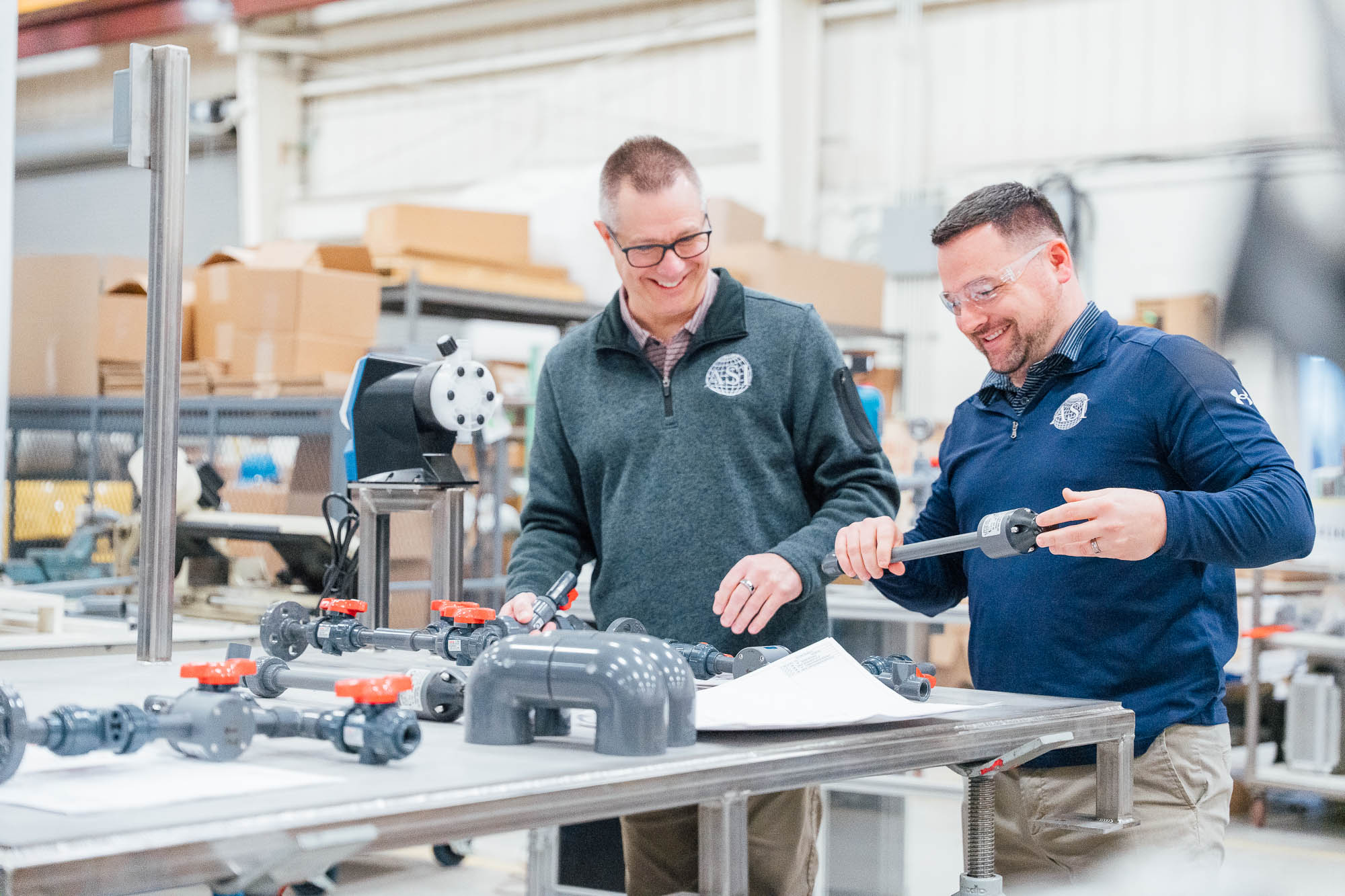
Ed & Dan meet to discuss a project.
Even when you stay within strong-acid concentrations, the system design can tighten up as concentration changes.
Here are the areas we see most often:
1) Materials selection becomes more concentration-specific
Your specialists called out that material selection changes with sulfuric acid concentration. In strong-acid service, shops often lean on proven corrosion-resistant options (for example, Alloy 20 in many designs),
but the “right answer” still depends on your exact concentration, temperature, and duty.
What to do: Always specify concentration + expected temperature range in your RFQ. If a vendor doesn’t ask, that’s a red flag.
2) The “small parts” can matter more than the big parts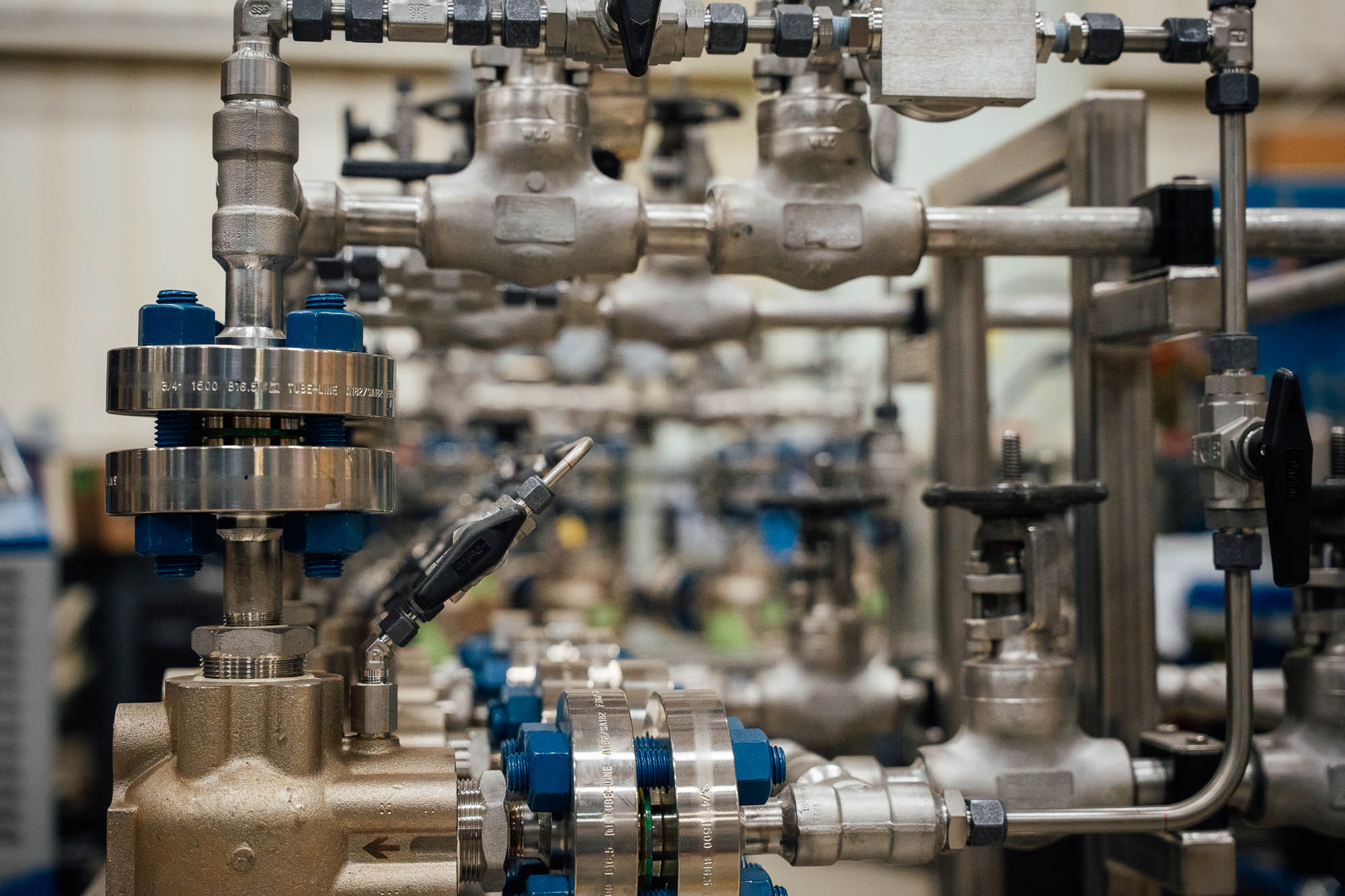
The interview highlighted a common reality: failures aren’t always the pump body or the main pipe run.
They’re often the hidden details:
- O-rings and elastomers
- Valve seats and packing
- Seals inside “standard” components
Those parts can be buried in product descriptions and easy to miss—until you’re cleaning up a leak.
3) Calibration/verification hardware can become a leak point
Many systems include a calibration column to verify metering pump output at different settings.
That’s useful—but the interview called out that calibration columns can be a repeat problem if sealing and alignment details aren’t right.
What to do: Treat calibration columns like critical leak-risk components. Don’t assume “standard” equals “safe for sulfuric.”
4) Connection strategy matters (especially anything threaded)
Your specialists also pointed to threaded connections as an easy place for sulfuric acid systems to end up with leaks, even with experienced installers.
For acid service, “easy to mess up” is not where you want to live.
What to do: Ask your vendor how they minimize leak risk at connections and how they control assembly quality (sealant choice, torque discipline, inspection/testing, etc.).
After concentration, here are the next design questions we ask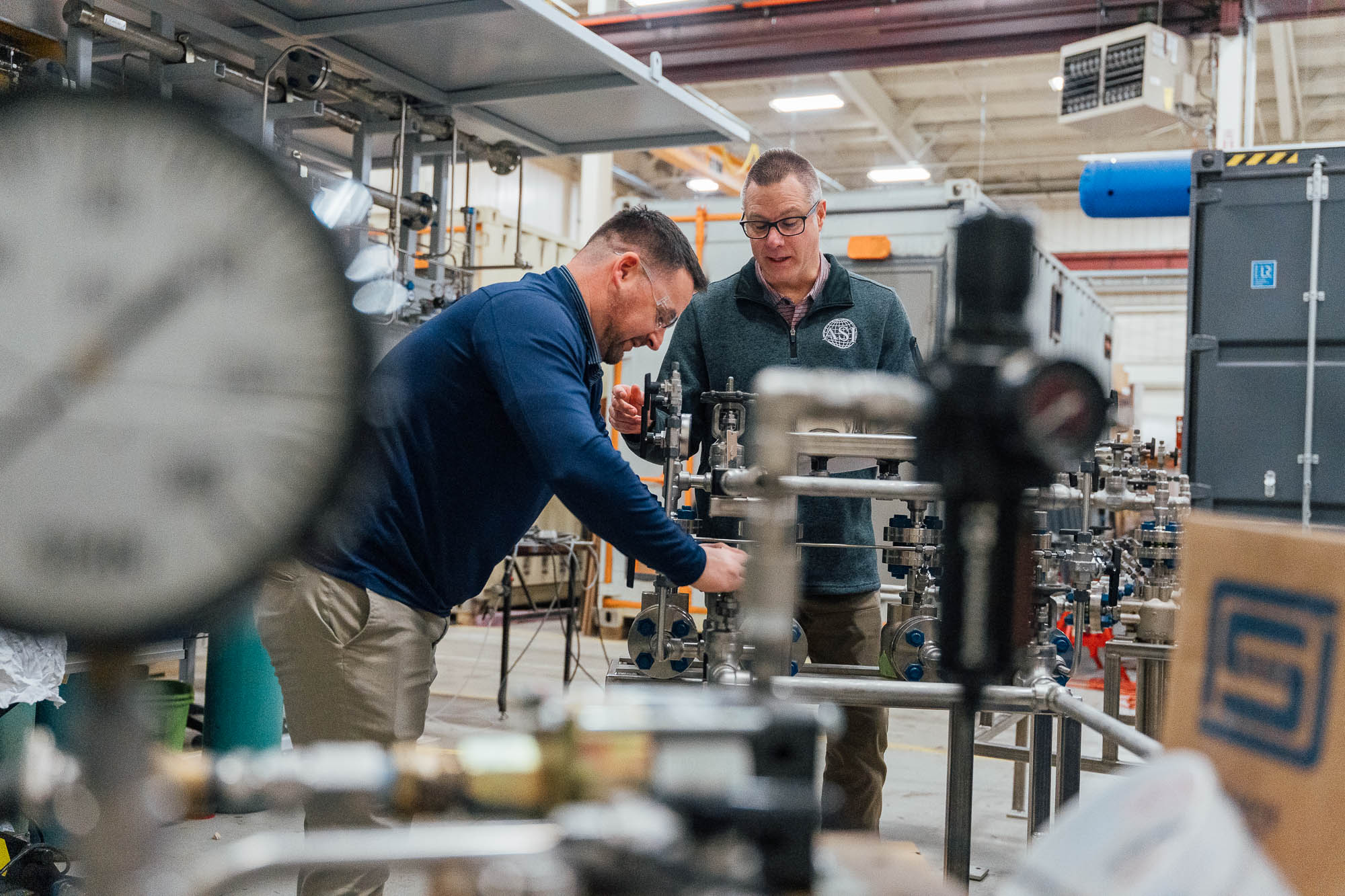
Once concentration is clear, the interview naturally moves into the questions that determine whether the system will start up cleanly:
- How is it stored? (tank material, tank package, level measurement approach)
- What’s the distance from storage to injection? (run length, routing, support, service access)
- What does the injection point look like? (mixing conditions, location, access, backpressure realities)
This matters because the skid isn’t the whole system. If the storage, piping run, or injection point are vague, you’ll get startup surprises.
A copy/paste RFQ checklist for 93% vs 98% sulfuric acid systems
If you want a sulfuric acid skid vendor to design the right system the first time, include these inputs:
Chemical & duty
- Sulfuric acid concentration (e.g., 93% or 98%)
- Expected temperature range (ambient + any heated areas)
- Target dose range (min / normal / max)
- Any known impurities/solids risk
Storage & routing
- Existing tank or new tank package?
- Storage material (or “vendor to recommend”)
- Distance and routing notes from tank to skid and skid to injection
Skid design & maintenance
- Access expectations for service and leak inspection
- Calibration/verification requirements (e.g., calibration column, preferred method)
- Critical “small parts” expectations (call out elastomers/seals if needed)
Controls
- Manual feed, paced feed, or closed-loop control?
- Required signals / integration expectations (if applicable)
What AmeriChem does differently (the short version)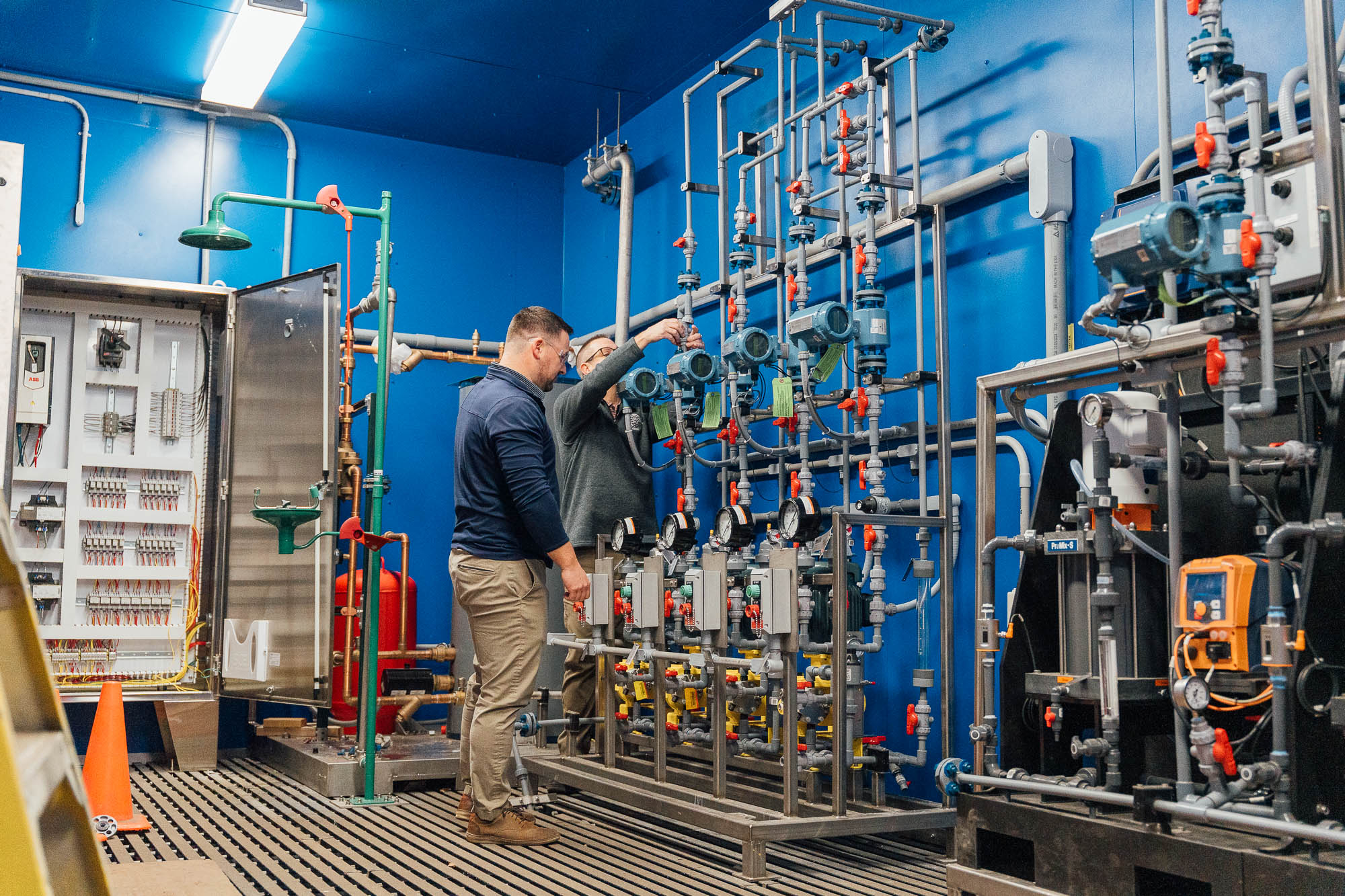
When sulfuric acid is in the scope, we don’t treat it like a generic chemical skid.
We start with concentration, then work outward:
- Define concentration + temperature range
- Confirm materials and sealing details (including the hidden stuff)
- Design for serviceability and leak integrity
- Document it so the plant isn’t guessing later
That’s how you protect uptime and avoid preventable failures.
FAQ: 93% vs 98% sulfuric acid feed systems
Is 98% sulfuric acid always “harder” on the system than 93%?
Not automatically. The point is that concentration changes the design assumptions. Confirm your concentration and temperature range early and design to that reality.
What’s the most common spec mistake with sulfuric acid skids?
Missing details on elastomers and seals—O-rings, packing, and other “small parts” hidden inside components.
What should I tell a skid vendor first?
Start with concentration and temperature range, then describe storage and distance to injection.
If a vendor starts quoting before clarifying those, slow the process down.
Need help scoping a sulfuric acid feed system?
If you want a quick sanity check on concentration-driven materials, sealing details, and RFQ inputs, talk with AmeriChem Systems.
We’ll help you scope it clearly so you can bid it cleanly and avoid preventable failures.